Manufacturing Inventory Software: WIP to Valuation
Manufacturing inventory software follows material across raw, work-in-process, and finished-goods states driven by the bill of materials. Here are the states, BOM backflushing, lot genealogy, valuation, and 2026 vendor vs custom build TCO.

On this page

Manufacturing inventory software tracks material as it is transformed, not just as it sits on a shelf. A retail tracker counts the same item in and out: a thousand units arrive, a thousand units sell, and the only question is how many are left. A plant has a harder problem. The steel that arrives isn't the bracket that ships. Material enters as raw stock, becomes work-in-process as it absorbs labor at each operation, and leaves as finished goods, and the bill of materials governs every step. That is why inventory management software for manufacturing differs from a retail tracker: it has to follow the material through the change, and a stock list can't.
If you're deciding how to track inventory in a plant, the vendor shortlist comes last. The parts that category pages skip come first: the three material states and the transitions between them, how backflushing consumes components, lot genealogy, valuation while material is still in process, and where a dedicated inventory layer differs from a warehouse system or an ERP module. Search results blur these systems together. Their data models are different, and the data model decides whether a system fits your floor.
The short version
- Manufacturing inventory software tracks material through three states: raw materials, work-in-process, and finished goods, with consumption driven by the bill of materials rather than a retail-style stock count.
- Backflushing deducts components automatically from the BOM when production is reported. One transaction replaces hundreds, but the book drifts from the physical shelf unless cycle counting reconciles scrap and substitutions.
- Lot and serial traceability forms a two-way genealogy graph: from any finished unit down to its input lots, and from any suspect raw lot up to every unit and customer affected.
- Standard cost is widely used for manufacturing valuation because it turns each deviation into a visible variance. WIP inventory has to be valued at partial completion as it accrues labor and overhead through the routing.
- The three systems that all claim the word inventory differ by data model: manufacturing inventory optimizes transformation, a WMS optimizes movement, and an ERP module optimizes business records.
- Most plants land on a hybrid: a standard ERP as the financial system of record, paired with a custom ISA-95 shop-floor WIP and GS1-128 genealogy layer. That layer costs $90,000 to $210,000 to build in CEE at $75/hr, or $198,000 to $462,000 in the US at $165/hr. In our illustrative two-plant, 45-scanner model it comes out $96,000 to $624,000 cheaper over 36 months than Katana, Cin7 Core, Fishbowl, or NetSuite.
What manufacturing inventory software actually is
Manufacturing inventory software is the system that knows what material a plant holds, in what state, at what value, and where it came from, as that material is consumed and transformed into product. The defining word is transformed. A retail or distribution tracker manages stock that does not change between receipt and sale, so its model is a list of items with quantities and a reorder point. A manufacturing system manages stock that is actively being turned into something else, so its model is anchored to the bill of materials: the structured recipe that says a finished unit is made of these components in these quantities.
Three things follow from that anchor. The BOM drives consumption, so the software deducts components when production happens, not when an order ships. Material spends time mid-transformation, so the software has to hold a work-in-process state that a stock counter has no slot for. And demand for components is derived from the products that contain them, which makes reordering a calculation off the BOM instead of a forecast off sales history. Strip those away and you're left with a list of SKUs, which is the wrong tool for a factory.
The three states manufacturing inventory software must track
Manufacturing inventory exists in three states, and the software has to track each one plus the transitions between them. In the classification ASCM and APICS use, the states are raw materials, work-in-process, and finished goods, and the ISA-95 Material Model formalizes their data structure into material classes, material definitions, material lots, and material sublots. The states are conditions, not places. The same physical material passes through all three, and the cost attached to it changes at every step.
Raw materials are the components and inputs a plant has bought but not yet committed to a job: the sheet metal, the resin, the purchased sub-assemblies. Raw material inventory is valued at what it cost to acquire and sits closest to the supplier end.
Work-in-process, almost always shortened to WIP, is material that has entered production and started absorbing labor and overhead but is not yet a finished unit. A retail model can't represent this state at all. A half-machined housing is no longer raw stock and not yet a product; its value is the raw material plus the work done so far. Serious systems track WIP by operation, so a unit's location and accumulated cost are known at each step of the routing rather than as one undifferentiated lump on the floor.
Finished goods are completed units ready to ship, valued at their full rolled-up cost. This is the only state a retail tracker has, which is why a retail tracker can't run a plant.
Backflushing: how manufacturing inventory software consumes materials
How does the software deduct components as production happens? Issuing every part by hand is accurate, and far too slow on a line that completes thousands of units a shift. Most plants reach for backflushing, and how it's tuned decides how honest the inventory stays.
Backflushing consumes component inventory automatically from the BOM when production is reported. An operator confirms 200 completed units; the system explodes the BOM and deducts the components those 200 units should have used, in one transaction instead of hundreds. The catch is that backflushing trusts the BOM completely. It deducts what the recipe says was used, not what was used on the floor, so scrap, substituted parts, and over-issues vanish from the book unless someone reports them through a separate path. Left alone, the book drifts. The system says 400 components are on hand while the shelf holds 360, the line starves, and both the availability and quality rates in OEE come out wrong.
The two main variants differ in when the flush fires.
Completion backflushing
Completion backflushing flushes only when a unit is reported finished. It's simple to run, but WIP consumption stays invisible until the end.
Milestone backflushing
Milestone backflushing flushes at defined points along the routing, so component consumption and WIP value update as a unit clears each milestone operation. You get a truer mid-production picture and pay for it with more reporting points.
Neither variant corrects itself. Plants that backflush also cycle count: the count reconciles the BOM's assumption against the physical shelf and resets the drift before it compounds.
Lot and serial traceability as a genealogy graph
Traceability in a plant is a graph. Each finished unit is a parent linked to the child lots and serials of the components consumed to build it, and those children link in turn to the lots their own inputs came from. Manufacturing inventory software records this genealogy as material is consumed, often structured around GS1 EPCIS 2.0 transformation events that capture what material was consumed, when, where, and why. From any finished unit you can walk down to every input lot, and from any suspect raw lot you can walk up to every unit that contains it. Quality management software works on the same problem from the inspection side. The inventory layer captures the links as consumption happens.
The graph has to survive the messy operations real plants run. Lots split when one received lot is consumed across several jobs, and merge when several lots feed one batch, so the genealogy is many-to-many rather than a tidy tree. A certificate of analysis often rides with a raw lot, recording the supplier's measured properties, and the system keeps that document attached to the lot wherever it flows. When something goes wrong, a recall becomes a query: given a defective component lot, return the finished units and customers affected, and nothing more.
For regulated makers the graph isn't optional. The FDA's FSMA-204 Food Traceability Final Rule applies to firms handling foods on the Food Traceability List. They have to keep specific key data elements at defined critical tracking events and hand them to the FDA as an electronic sortable spreadsheet within 24 hours of a request, with a compliance date of July 20, 2028.
Medical devices fall under a different rule, the FDA 21 CFR Part 820 Quality Management System Regulation (QMSR), which incorporated ISO 13485:2016 in February 2026. Device makers must keep a record for each device or batch that supports traceability to the extent their procedures and the device require. Component-lot traceability is mandatory for implantable devices. A plant whose inventory system can't already record lot links at each transformation will struggle to meet either rule by bolting records on after the fact.
How manufacturing inventory software values stock
Inventory is also money on the balance sheet, and a manufacturing system has to value stock as it transforms, not just as it sells. Under both international accounting rules in IAS 2 Inventories and US GAAP rules in FASB ASC 330, inventory valuation must include not only purchase cost but also conversion costs, meaning direct labor and a systematic allocation of fixed and variable production overheads incurred in transforming raw materials into finished goods. Four methods cover almost all plants, and the choice is as much an accounting decision as a software one.
FIFO and weighted average
FIFO assumes the oldest stock is consumed first, so the cost flowing out matches the earliest purchase prices. It fits material with shelf life and keeps the on-hand valuation close to recent cost. Weighted average blends every unit into one running average cost, which smooths price swings and gives up lot-level precision. These are the two cost formulas IAS 2 permits for interchangeable items. IAS 2 prohibits LIFO, which US GAAP still allows.
Standard and actual cost
Standard cost values material at a planned figure set in advance, then books the difference against the real cost as a variance. IAS 2 accepts it as a measurement technique where the result approximates actual cost. Actual cost carries the true cost of each specific lot or unit through. It's the most precise method and the heaviest to maintain.
Standard cost is widely used in manufacturing for a plain reason: it makes cost predictable and turns every deviation into a visible variance. A purchasing overspend or a yield loss shows up as a number a controller can chase, where a blended average would hide it.
Retail methods don't anticipate one thing: WIP has to be valued at partial completion. A unit halfway through its routing carries its consumed material plus the labor and overhead absorbed at the operations it has cleared, and the system rolls that cost up through the BOM levels as the unit advances. The standard-versus-actual rollup by BOM level takes real engineering work. No vendor ships it as a checkbox.
Manufacturing inventory software vs a WMS and an ERP module
Three kinds of system all claim the word inventory, and treating them as one is the most expensive mistake in the evaluation. Feature counts won't tell them apart. What each data model is built to optimize will: transformation, movement, or business records.
Manufacturing inventory software optimizes transformation. Its model is anchored to the BOM, so its native verbs are consume, build, and value as material changes state. It is the only one of the three that holds a real WIP state and computes dependent demand from product structure.
A warehouse management system optimizes movement. A WMS is built to receive, putaway, pick, and ship efficiently across bins and zones, and it's very good at that. But its model treats an item as the same item from dock to dock; it has no concept of a BOM consuming components into a higher-level part, because nothing transforms inside a warehouse. A plant that runs only a WMS can tell you where everything is and still not know what its WIP is worth.
An ERP inventory module optimizes business records. The ERP keeps balances and values stock so the books are right and orders can be promised, as one module beside finance and purchasing. It's the system of record, but built for breadth, so its WIP tracking, backflush tuning, and genealogy tend to be shallower than a plant that lives by those mechanics needs. A focused inventory layer fills the gap between what the standard module does and what the floor requires.
Dependent demand: reorder and safety stock in manufacturing
Dependent demand is demand for a component that exists only because a parent item needs it, calculated by exploding the BOM through MRP. Its counterpart, in the split ASCM and APICS use, is independent demand: demand for an item in its own right, like a finished product a customer orders, which is forecast from history. Retail reordering runs on forecasts. A plant that reorders components the same way ends up with the wrong stock of everything.
This is why a manufacturing inventory system leans on the MRP explosion rather than a reorder point for components. If the plan calls for 500 pumps and each takes two bearings, the requirement is 1,000 bearings on the dates the pumps are built, netted against what is on hand and on order. We cover that calculation in our production planning software breakdown. For inventory, the point is that component requirements are derived, not predicted.
Safety stock follows the same logic. For independent-demand finished goods, it buffers forecast error, the gap between what you predicted and what customers bought. For dependent-demand components, the requirement is comparatively known once the build plan is set, so the buffer is sized more against supply variability (late deliveries and yield loss) than against demand uncertainty. MRO spare-part buffers can be sized from the failure-horizon estimates that predictive maintenance software produces. One blanket reorder rule, the way a retail tracker would set it, overstocks the predictable components and understocks the volatile ones at once.
Cycle counting, barcoding, and shop-floor data capture
Cycle counting is counting a rolling subset of items every day so the perpetual record stays accurate without a plant shutdown. Every mechanic above assumes the book matches the shelf, and that takes work. The older approach, the annual physical inventory, stops the plant to count everything at once, and the result is stale the moment it ends. With cycle counting, discrepancies surface continuously and production keeps running.
What to count how often is decided by ABC analysis, a standard ASCM and APICS technique that ranks items by their share of inventory value. The high-value A items, few in number but most of the money, get counted most frequently; the low-value C items, numerous but cheap, get counted rarely. This focuses scarce counting effort where an error costs the most, which is also where backflush drift does the most damage.
None of this scales on a clipboard. Accurate capture comes from scanning, and the standard underneath it is GS1. Its GTIN identity keys and the GS1 General Specifications for GS1-128 Application Identifiers encode item identity (AI 01), batch or lot number (AI 10), expiration date (AI 17), and serial number (AI 21) in a single machine-readable barcode or DataMatrix symbol. Automated lines add passive UHF RFID tags operating under the ISO/IEC 18000-63 air-interface standard, and we go deeper on tags and portals in our RFID inventory management software guide.
Barcodes and RFID within a connected smart factory let an operator or portal reader record a consumption, a move, or a count in one scan. Scanning also makes shop-floor backflushing reliable, because the BOM deduction fires on a scan at the operation and nobody has to remember it at shift end. The same capture layer feeds the execution system, and we cover how the floor records production in what an MES does. For inventory, the rule is to capture every transformation where and when it happens.
Build, configure, or buy manufacturing inventory software
The decision is which parts to buy, which to configure, and which to build, and it starts from one question: where is your inventory logic ordinary, and where is it your advantage? The parts that look like every other plant's are the ones a standard product already models well. The parts that make you distinctive are the ones no package will fit.
Buying or configuring a standard product is the right default for the common ground. If your BOM consumption, valuation, and traceability work like the industry norm, a mature inventory or ERP product gives you years of accumulated functionality and a maintained upgrade path, and the discipline is to stay close to standard because every customization is a thing you re-test forever. Building custom wins for the differentiating core: an unusual backflush rule, a genealogy that crosses a process-to-discrete handoff, a costing method the standard module cannot express, or the deep MRP and MES integration a shallow module fakes. Once the list of workarounds becomes the implementation, you're paying custom-software money for code you don't own.
On cost, the range is wide. NetSuite's own implementation cost guide is typical of ERP guidance, which puts small deployments from about $25K and enterprise rollouts from $250K to past $1M. Plant count, BOM and genealogy depth, and ERP integration move the number most (see our inventory management software cost guide for detailed SaaS vs custom math). The pattern most plants land on is hybrid: keep a standard ERP as the system of record, and build the specialized inventory or execution layer around it, integrated alongside production planning software and MES workflows so balances and costs stay reconciled. That is the shape of work we do in our custom software development, product development, and manufacturing practices. HaulBreeze, our own supply-chain platform, and the Conveya transportation-management rebuild are both layers engineered around existing systems of record, not replacements for them. AirpartChain anchors aircraft-part records to a tamper-evident ledger, a traceability problem with the same genealogy shape as manufacturing inventory. Idealogic doesn't sell a packaged inventory product. We build the layers and integrations that make one fit a plant that doesn't run like the template.
Inventory management software for manufacturing: 36-month TCO of Katana, Cin7, Fishbowl, NetSuite and a custom build
When discrete and batch-process manufacturers outgrow spreadsheets or basic accounting inventory, four commercial options come up in most evaluations: Katana, Cin7 Core (formerly DEAR Systems), Fishbowl Advanced, and Oracle NetSuite with its WIP and routing add-on. The fifth option is an owned ISA-95 shop-floor WIP layer with GS1-128 or RFID lot genealogy and ERP synchronization.
Scope and assumptions. This is an illustrative model, not a set of vendor quotes. Published list prices as of November 2026: Cin7 Standard, Pro and Advanced at $349, $599 and $1,199 per month, and Fishbowl Advanced Manufacturing from $675 per month. Katana and NetSuite are quote-based. Every 45-seat figure below is our estimate, and the feature cells describe typical configurations, so confirm both with each vendor.
Where commercial manufacturing inventory software wins
Choose Katana or Cin7 Core when you're a single-site D2C brand or light discrete assembler with fewer than 15 shop-floor users, you run Shopify with QuickBooks or Xero, and you need fast BOM kitting and reorder visibility. Fishbowl Advanced fits a plant that's staying on QuickBooks with standard discrete work orders. NetSuite makes sense when you're replacing finance and supply chain together under standardized corporate processes.
Where an owned layer wins
Seat pricing and shallow WIP start to hurt at two or more plants. With 45 shop-floor operators and handheld scanners, our model puts NetSuite per-seat licensing plus SuiteScript integration work near $900,000 over 36 months. The smaller cloud MRP tools cost less, but in our experience they fall short on standard-cost variance rollups, offline resilience at the plant edge, and lot genealogy that survives splits and merges. Plants end up back on shadow spreadsheets at shift close.
The worked 36-month TCO model below covers a manufacturer with 2 discrete or process plants, 45 shop-floor operators and warehouse handheld scanners, and 35,000 active SKUs and component lots, syncing financial journals to an existing accounting or ERP general ledger:
In this model, over 36 months across 2 plants and 45 shop-floor operators and scanners, an owned ISA-95 WIP and GS1-128 genealogy layer built in CEE comes out $96,000 below Katana, $121,000 below Cin7 Core, $187,000 below Fishbowl Advanced, and $624,000 below NetSuite. You also stop paying per-scanner license fees each time you add a shift or a line.
Idealogic's 2026 build tiers for manufacturing inventory software compare senior CEE manufacturing squads at a $75/hr blended rate with US industrial software consultancies at $165/hr blended. Both rates are our assumptions. For context, Eurostat lc_lci_lev puts the 2025 EU average hourly labour cost at EUR 34.9, but that figure covers every sector of the economy and isn't a senior engineering rate.
CTO and Co-founder at Idealogic. Directing engineering, systems architecture, security, and full-stack delivery across web, mobile, and blockchain.
Frequently asked questions
Manufacturing inventory software tracks material while production transforms it, where a retail tracker only counts what sits on a shelf. It is anchored to the bill of materials (BOM) and the routing, so it follows stock from raw materials through work-in-process (WIP) by operation to finished goods. Inventory management software for manufacturing also backflushes components from the BOM, keeps lot and serial genealogy in both directions, values WIP at partial completion, and calculates dependent component demand.
Raw materials, work-in-process (WIP), and finished goods, in the classification ASCM and APICS use. Raw materials are purchased inputs that have not been released to production. WIP inventory is material on the shop floor that has absorbed some labor and overhead at the routing operations it has cleared. Finished goods are completed, inspected units valued at full rolled-up cost and ready to ship.
Backflushing deducts component inventory from the bill of materials when an operator reports production, so nobody issues parts by hand on a high-volume line. Completion backflushing deducts components only when a finished unit is reported. Milestone backflushing deducts them at specific routing operations. Backflushing assumes the BOM is exact and misses unreported scrap and substitutions, which is why plants pair it with ABC cycle counting to reconcile the book balance against the shelf.
Depth on the shop floor. A standard ERP inventory module keeps financial balances, general ledger valuation, and order promising right across the business. Dedicated manufacturing inventory software, or a custom shop-floor inventory layer, handles the production mechanics: WIP tracking by operation, milestone backflushing, lot genealogy that survives splits and merges, and multi-level BOM cost rollups. Many plants run both, with a commercial ERP as the backbone.
FIFO, weighted average, standard cost, and actual cost of specific lots. IAS 2 permits FIFO or weighted average for interchangeable items and specific identification for items that are not interchangeable, and it allows standard cost only where the result approximates actual cost. It prohibits LIFO, which US GAAP under FASB ASC 330 still allows. Standard cost is widely used in manufacturing because it values material, labor, and overhead at planned rates and reports each deviation as a price, usage, or efficiency variance. Whatever the method, WIP has to be valued at partial completion along the routing.
Buy and configure a standard ERP or inventory package when your BOM consumption, valuation, and lot tracking match standard discrete or process templates. Build custom software, or a hybrid shop-floor layer integrated to your ERP, when your operation depends on nonstandard backflush rules, mixed-mode batch-to-serial genealogy, catch-weight conversions, or automated GS1 barcode and RFID capture that off-the-shelf modules cannot model cleanly.
Lot traceability records a directed genealogy graph that links every finished unit or batch to the component lots consumed at each routing step, including lot splits and blends. The graph answers two questions: which raw inputs went into this finished unit, and which shipments contain this suspect supplier lot. Two FDA rules lean on it. FSMA Rule 204 applies to foods on the Food Traceability List. For medical devices, 21 CFR Part 820 (the QMSR, which incorporates ISO 13485:2016) requires a record for each device or batch, with component-lot traceability mandatory for implantable devices and otherwise set by the manufacturer's own procedures.
Independent demand is demand for finished products ordered by customers and is forecasted from historical sales and market trends. Dependent demand is demand for raw materials, components, and sub-assemblies calculated directly by exploding the parent production schedule through the bill of materials via MRP. Component demand is derived from the build plan, so safety stock for components buffers supplier lead time and yield variability, not sales forecast error.
Katana and Cin7 Core suit smaller make-to-stock brands that sync with Shopify and QuickBooks or Xero, and both stay close to order-level assembly and average-based costing. Fishbowl Advanced adds deeper multi-level BOMs and mobile warehouse barcoding for plants on QuickBooks. Oracle NetSuite with its WIP and routing add-on brings standard costing with variance accounting inside an enterprise ERP, and it costs the most per seat and in SuiteScript implementation work. Katana and NetSuite are quote-based, so confirm current plans with each vendor.
An owned ISA-95 shop-floor WIP layer with GS1 barcode or RFID lot genealogy and ERP synchronization costs $90,000 to $210,000 to build in Central and Eastern Europe at $75 per hour, or $198,000 to $462,000 in the US at $165 per hour. In our illustrative model of two plants, 45 shop-floor operators and scanners, and 35,000 SKUs over 36 months, the owned layer totals about $276,000 including the build. The same model puts Katana at $372,000, Cin7 Core at $397,000, Fishbowl Advanced at $463,000, and NetSuite with WIP and routing at $900,000. The commercial figures are our estimates, and real quotes vary.
More from the journal
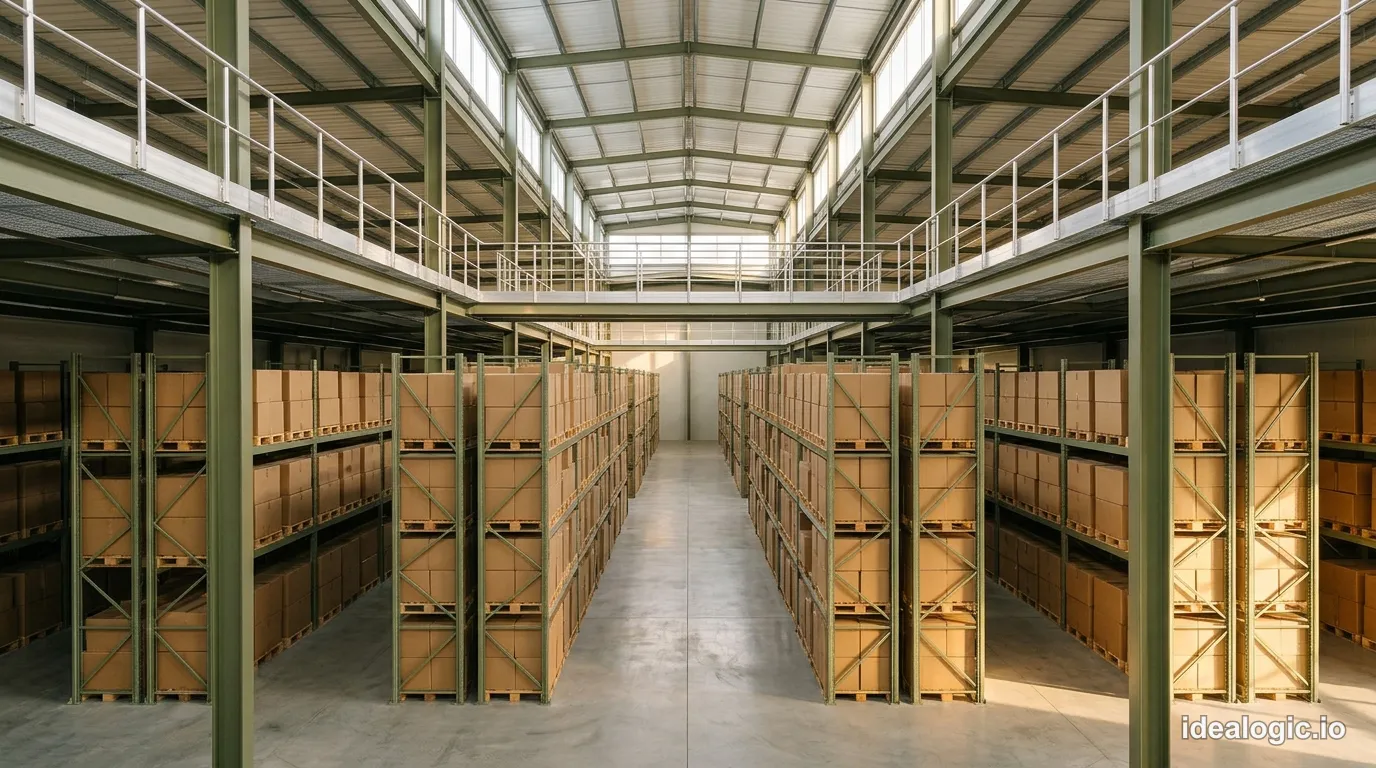
Inventory Management Software Cost: SaaS vs Custom (2026)
What inventory management software costs in 2026 across both paths: off-the-shelf SaaS and ERP modules ($0 to $1,199+/mo plus EDI add-ons) versus custom barcode, EDI, and RAIN RFID inventory platforms ($45,500 to $245,000+), with 3-year TCO math.
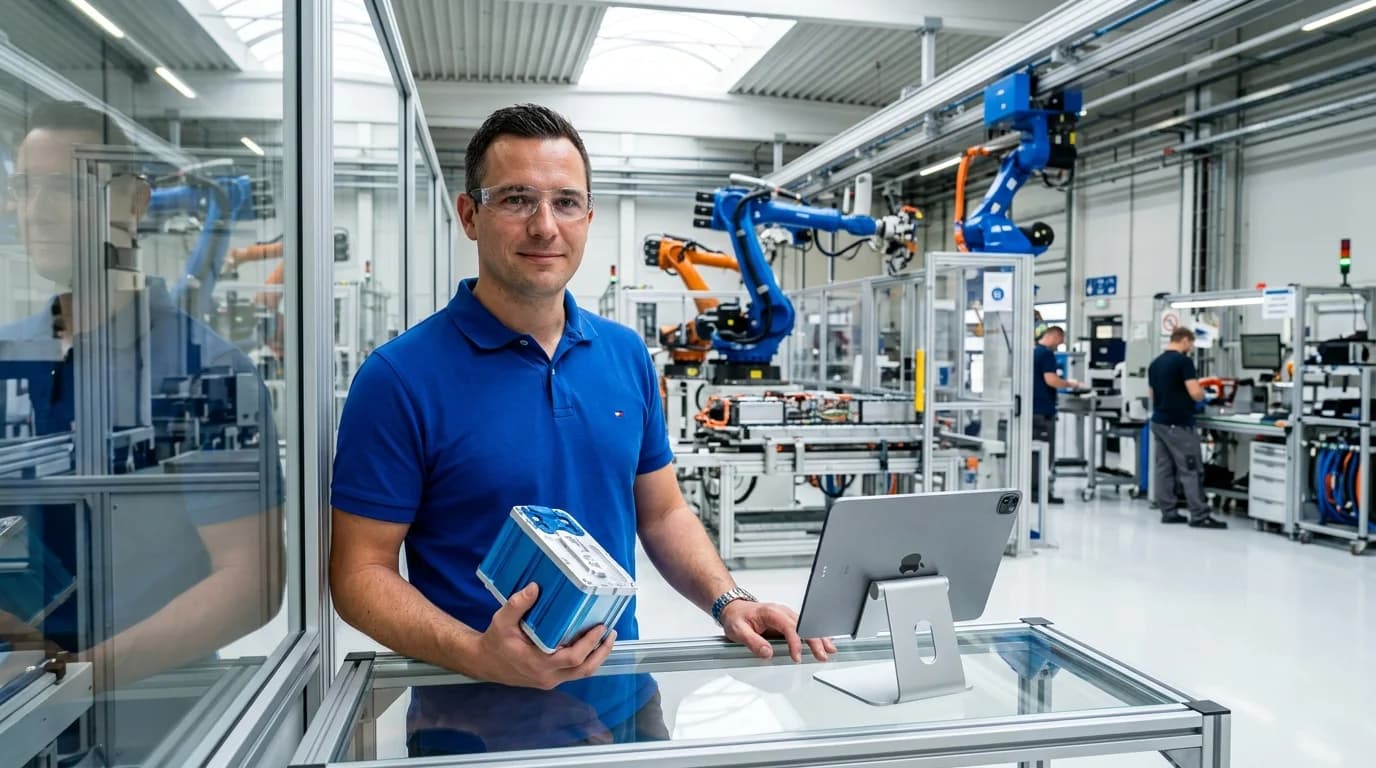
MES Software: Manufacturing Execution System Guide & 2026 Cost
Manufacturing execution system (MES) software governs real-time shop-floor production at ISA-95 Level 3: dispatching work orders, enforcing station interlocks, capturing OPC UA telemetry, and building lot genealogy.

Quality Management Software: 2026 eQMS TCO & Build Cost
Quality management software runs the quality system: document control, non-conformance, CAPA, audits, SPC, and supplier quality. Here are the modules, how they close the loop, how the QMS integrates with ERP and MES, what validation demands, and when to build instead of buy.